
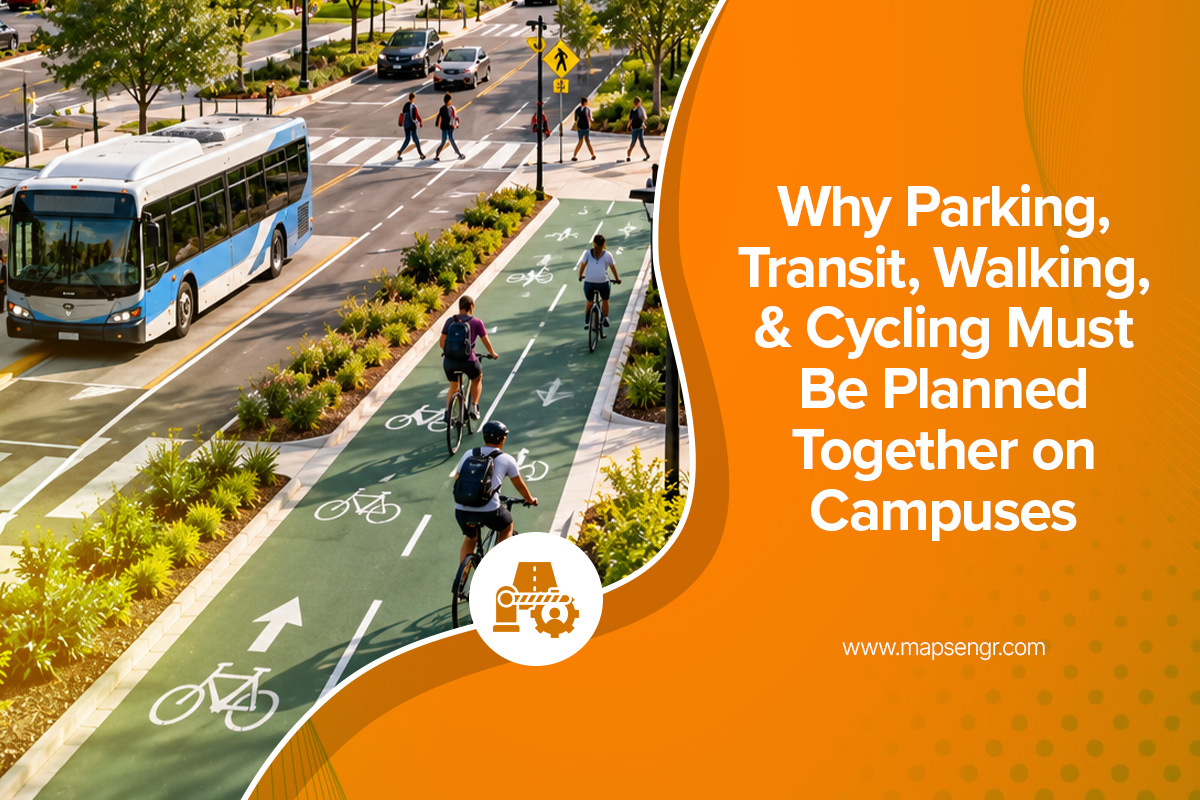
University campuses are complex environments where thousands of people may travel between classrooms, offices, residences, parking areas, and recreational facilities each day. Students, employees, visitors, cyclists, pedestrians, buses, and service vehicles often use the same limited network of roads and pathways. This is why universities need an integrated approach. Professional mobility planning services for university campuses examine parking, transit, walking, and cycling as parts of one connected transportation system. This helps institutions improve safety, accessibility, circulation, and long-term campus development.
Coordinated Planning Improves Safety
University campuses often experience concentrated periods of movement before classes, during employee shift changes, and around sporting or cultural events. During these times, vehicles, cyclists, buses, and pedestrians may all enter the same areas at once.
When transportation elements are planned independently, conflict points can develop. Parking entrances may cross busy walkways, bus stops may interrupt bicycle routes, or pedestrians may need to cross wide roads without suitable facilities.
Parking Should Support the Wider Mobility Network
Parking remains important for commuters, employees, visitors, people with accessibility needs, and service providers. However, parking challenges are not always caused by a lack of spaces.
Some parking areas may be overcrowded because they are close to popular buildings, while spaces in more distant locations remain unused. Remote parking may be inconvenient when shuttle services are unreliable or pedestrian connections are unclear. In these situations, constructing another parking area may not solve the underlying problem.
Effective university parking solutions consider occupancy, peak demand, user needs, permit arrangements, circulation, and connections to other transportation modes. This allows universities to understand how their existing parking resources are being used and where improvements are genuinely required.
Cycling Facilities Need Continuous Connections
Cycling can provide an efficient way to travel across large campuses, but isolated bicycle lanes or a small number of racks will not create a complete network.
Cyclists need routes that connect campus entrances with classrooms, residences, offices, transit stops, and other major destinations. Safe intersection treatments and conveniently located bicycle parking are also important.
The design must account for interactions between cyclists, pedestrians, buses, and private vehicles. A bicycle path that ends suddenly or crosses a busy loading zone may create more problems than it solves.
Including cycling within broader campus mobility planning services helps universities develop routes that are practical, connected, and suited to real travel patterns.
Integrated Planning Supports Better Use of Space
University land is valuable and often limited. Space used for surface parking cannot also be used for academic buildings, housing, landscaping, recreational areas, or pedestrian spaces.
An integrated transportation plan helps university leaders compare different ways to meet travel demand. Instead of immediately building more parking, an institution may improve shuttle services, adjust permit arrangements, redesign pedestrian routes, or strengthen bicycle access.
Balanced university parking solutions can support essential vehicle access while allowing campuses to use their land more efficiently. They can also help universities prepare for new buildings, changing enrolment, and future development.
Conclusion
Parking, transit, walking, and cycling cannot function effectively as separate campus systems. Each one influences how people arrive, move between facilities, and leave the university. Planning them together can improve safety, reduce unnecessary traffic, manage parking demand, strengthen accessibility, and make better use of campus land. It also helps universities avoid isolated improvements that solve one problem while creating another.
FAQs
- How Often Should a University Review Its Campus Mobility Plan?
A university should review its plan whenever enrollment, facilities, transport services, or travel patterns change significantly. - Can Campus Mobility Planning Support Special Events?
Yes. It can help universities manage temporary traffic, visitor parking, shuttle operations, and access during major events. - Who Should Be Involved in Campus Transportation Planning?
Facilities teams, administrators, students, transport operators, accessibility representatives, and planning professionals should all contribute.