
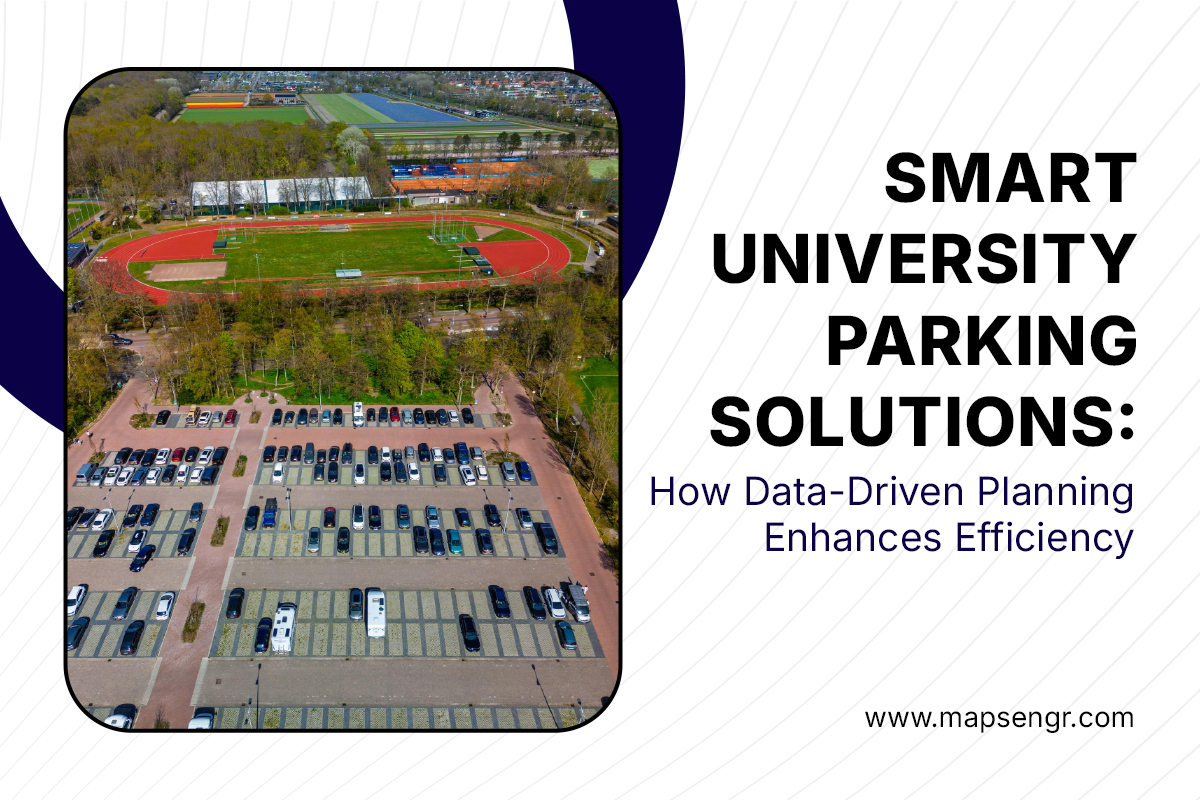
Efficient campus mobility relies on strong planning strategies, accurate forecasting, and well-managed parking/transportation systems. We offer structured approaches that support university parking solutionsby analyzing travel behavior, measuring parking demand, assessing operations, and identifying campus design/infrastructure opportunities to improve mobility. As campuses continue to evolve, accurate planning helps institutions manage both short-term and long-term needs while maintaining safe and efficient mobility for students, faculty, and visitors.
Understanding Current Demand Through Parking Utilization Studies
A strong parking strategy begins with an accurate understanding of how facilities are used throughout the day. Utilization studies measure occupancy patterns, peak-hour demand, turnover rates, and overall availability.
This information helps identify whether parking shortages are due to true capacity limitations or imbalanced distribution across lots and structures. When supported by real data, university parking solutions can be developed with greater accuracy and efficiency.
Utilization studies also help determine how changes in class schedules, campus growth, or transportation initiatives may influence parking needs. By examining detailed metrics, planners can recommend improvements that support more efficient traffic flow, safer circulation, and better allocation of parking resources.
Policy Planning Supported by Mobility Planning Services
Policy decisions influence how students and staff interact with campus parking and transportation systems. Mobility Planning Services help guide these decisions by evaluating transportation demand, TDM strategies, pedestrian activity, and mobility patterns.
Through structured analysis, planners can recommend policy adjustments such as TDM strategies, curb management, permit allocation, alternative transportation infrastructure improvements, improved enforcement methods, shared-parking strategies, or transit improvements.
These planning services also help evaluate how campus shuttles, micro-mobility options, bicycle networks, and pedestrian routes interact with parking availability. By integrating these factors, campuses gain a clearer picture of how to balance convenience, safety, and operational efficiency.
Technology-Driven Improvements That Enhance Campus Efficiency
Modern parking systems rely on technology to support better decision-making and improve user experience. Tools such as real-time parking occupancy monitoring, digital permits, license-plate cameras, and app-based mobile payment platforms make parking operations more accurate and manageable.
When combined with comprehensive studies, these systems help institutions improve distribution, reduce unnecessary circulation, and streamline daily operations.
As campuses grow, technology provides an important layer of insight that allows planners to evaluate performance over time. Data tracking shows how policy changes or expansion plans influence real use, helping refine future strategies.
Planning for Long-Term Campus Growth and Transportation Needs
Long-term success requires solutions that align with enrollment projections, development plans, and evolving transportation patterns. University Parking Solutions plays an important role in preparing campuses for these changes.
Through careful evaluation, planners can recommend updates that improve circulation efficiency, maximize available space, and support safe multimodal access across the campus environment.
These strategies help institutions reduce congestion, support sustainability initiatives, and improve the overall campus experience. As needs shift, structured planning ensures that parking and mobility systems continue to operate efficiently and responsibly.
Conclusion
Strong transportation planning relies on accurate data, informed policies, and technology that supports operational efficiency. By combining utilization studies, policy guidance, and coordinated improvements with mobility planning services, institutions gain structured solutions that address both current demands and future growth. We use these approaches to help university campuses operate more efficiently, and MAPS supports these efforts with expertise grounded in practical analysis and planning.
Visit us to explore smart mobility strategies and parking solutions designed to improve efficiency, support campus planning, and enhance overall transportation performance.
FAQs
1. What are University Parking Solutions?
They are structured strategies that help campuses manage parking demand, improve circulation, allocate resources, and support alternative modes of transportation more efficiently using data-driven planning and operational analysis.
2. How do parking utilization studies improve campus planning?
They measure occupancy, turnover, and peak-hour patterns, giving planners accurate data needed to recommend operational improvements and better space allocation and parking policy.
3. What role does technology play in modern parking planning?
Technology supports real-time monitoring, automated permitting, improved enforcement, and data tracking that helps campuses evaluate performance and plan long-term updates.
4. How do Mobility Planning Services contribute to campus efficiency?
They analyze transportation demand, pedestrian flow, access routes, and multimodal needs, helping shape policies and planning decisions that support safer and more efficient campus operations.
5. Why is policy planning important for university parking operations?
Policies influence how spaces are used, who has access, how to allocate resources, and what strategies should be implemented to support alternative mobility. Strong policies help align parking and transportation systems with overall mobility goals.