
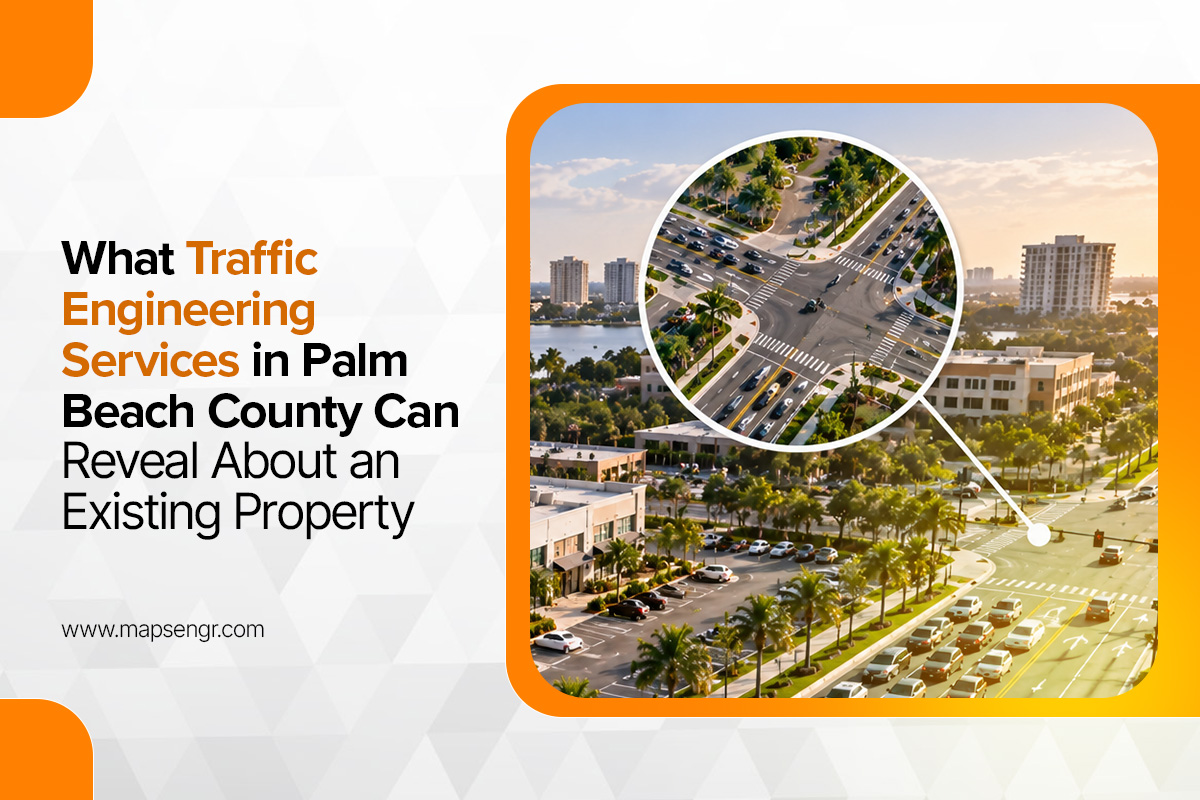
A property may seem to operate smoothly most of the day yet experience sudden congestion during peak periods such as hospital shift changes, school transitions, or retail surges. At these times, queues form, parking becomes difficult, and access points feel overwhelmed. However, the visible symptoms are often not the true source of the problem. This is where traffic engineering services in Palm Beach County play an important role—not only for new developments but also for diagnosing issues in existing, fully operating sites.
A structured evaluation helps property owners understand when problems occur, what causes them, and which solutions are supported by real data rather than assumptions.
Internal Site Movement Often Drives Roadway Queues
A common misconception is that roadway congestion is caused by external traffic conditions. In many cases, the delay actually begins inside the property.
Drivers may be:
- Searching for available parking
- Stopping at gates or payment systems
- Yielding to pedestrians
- Conflicting with delivery or service vehicles
When internal circulation is inefficient, delays extend to the entrance and appear as roadway queues. Identifying the true starting point helps determine whether the issue is related to access design, internal layout, or operational procedures.
Parking Issues Are Often About Distribution, Not Supply
Parking complaints are frequently interpreted as a shortage of spaces. However, analysis often shows that the total supply is adequate but poorly used.
Typical issues include:
- Employees occupying prime visitor spaces
- Uneven use of remote parking areas
- Poor wayfinding and visibility
- Overlapping peak demand periods
In these situations, improving allocation, signage, or circulation can be more effective than expanding parking. Similar integrated evaluations are also common in traffic engineering services in Pinellas County, where parking behavior is closely linked to traffic flow.
Uneven Use of Access Points Creates Bottlenecks
Many properties have multiple entrances, but traffic often concentrates at one primary access point. This imbalance can create congestion even when overall capacity is sufficient.
A site review may reveal:
- Drivers favoring the most visible entrance
- Inadequate directional signage
- Conflicting turning movements
- Poor separation of inbound and outbound traffic
Adjusting signage, access design, or circulation patterns can help distribute demand more evenly.
Curbside Activity Can Disrupt Flow
Loading zones, rideshare pickups, and short-term stops often compete for limited curb space. During peak hours, these activities can significantly disrupt circulation.
For example, a delivery vehicle blocking a travel lane may cause temporary congestion that repeats daily. Managing timing, location, or separation of these activities can reduce conflicts without major construction.
Pedestrian Movement Affects Vehicle Efficiency
Pedestrian activity is often overlooked in traffic evaluations. On campuses, healthcare facilities, and mixed-use sites, pedestrians may cross unpredictably or move between parking and entrances in ways that slow vehicles.
Improving crosswalk placement, visibility, and pedestrian pathways can reduce hesitation and improve overall traffic flow.
Short Peak Periods Drive Most Problems
Many properties function well most of the day but struggle during short, intense peak periods such as:
- Shift changes
- Class transitions
- Event arrivals and departures
- Weekend shopping surges
Focusing only on average conditions can hide these critical peaks. Targeted analysis helps identify when demand spikes occur and whether operational adjustments can address them.
Operational Changes Often Work Better Than Construction
A key finding in many traffic studies is that physical expansion is not always necessary. Instead, improvements may include:
- Reallocating parking spaces
- Adjusting delivery schedules
- Improving signage and wayfinding
- Modifying striping or circulation patterns
- Updating operational policies
This “diagnose first, build second” approach ensures that solutions directly address the root cause.
Conclusion
An existing property often reveals more through its daily operations than through its original design. By studying how vehicles, pedestrians, and parking systems interact, traffic engineering services in Palm Beach County can identify the real causes of congestion and inefficiency. Similar approaches used in traffic engineering services in Pinellas County also show that traffic, parking, and access must be evaluated together to improve performance.
When recurring congestion or parking issues arise, a structured traffic evaluation can provide clarity and guide practical, cost-effective improvements.
Frequently Asked Questions
Can existing properties benefit from traffic engineering studies?
Yes. These studies help identify operational inefficiencies, peak demand issues, and circulation problems in already functioning sites.
What causes recurring traffic queues on a property?
Queues often begin inside the site due to parking delays, pedestrian conflicts, or inefficient circulation rather than external roadway conditions.
Is adding parking always the solution?
Not necessarily. Many issues are caused by poor distribution or management of existing parking rather than a true shortage of spaces.