
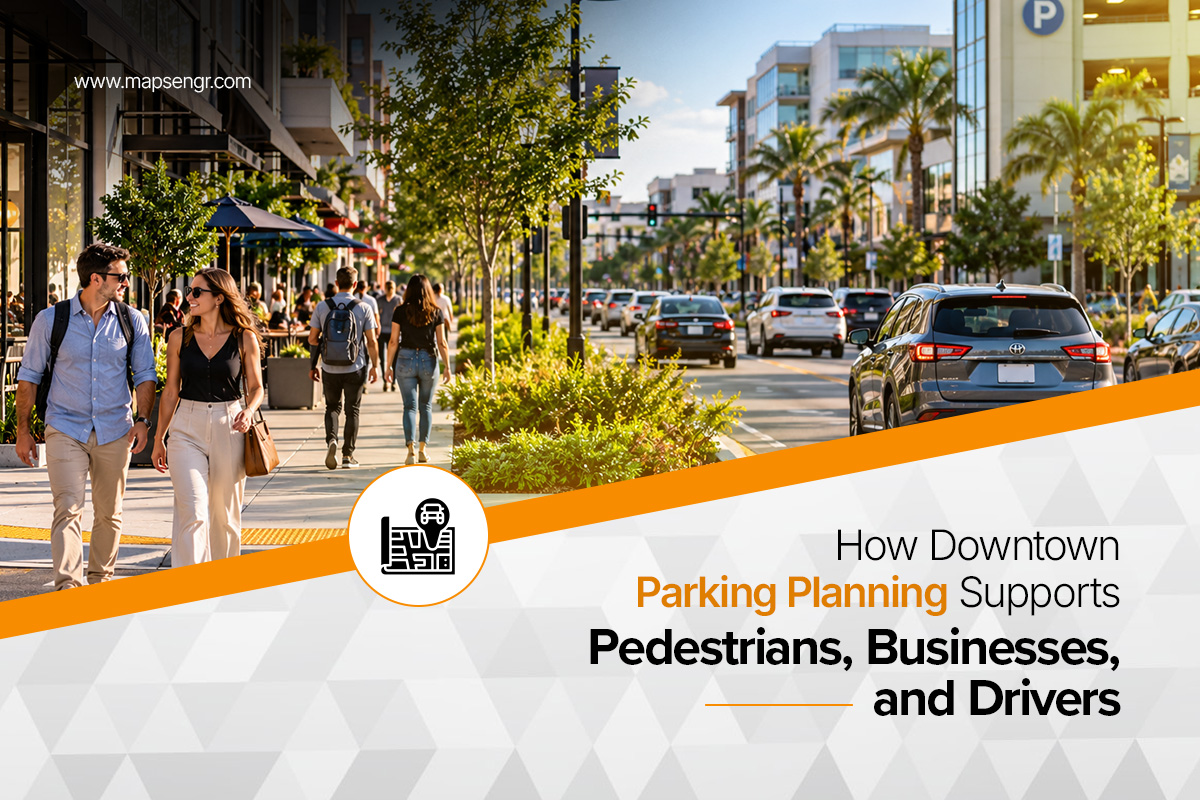
Downtown areas must accommodate many different activities within a limited amount of space. Residents, employees, customers, delivery vehicles, public transport, cyclists, and pedestrians often use the same streets throughout the day. When parking is planned without considering these overlapping needs, it can create congestion, unsafe crossings, confusing traffic movements, and access problems for local businesses. Effective downtown parking planning in Florida is not simply about providing a certain number of parking spaces. It involves understanding when and where parking demand occurs, how vehicles move through the area, and how people travel between parking facilities and their destinations. A well-planned system can improve safety, make businesses easier to reach, and reduce unnecessary traffic on busy downtown streets.
Improving Pedestrian Access and Safety
Parking areas form an important part of the pedestrian network because every person who parks must walk to a nearby building or destination. Sidewalk connections, crossings, driveways, and parking entrances must therefore be planned together.
Poorly positioned access points can force pedestrians to cross busy vehicle paths or walk through parking aisles. Spaces located too close to intersections may also affect visibility between drivers and people crossing the road. A parking assessment can identify these concerns and recommend clearer walkways, better crossing locations, improved signs, and more direct routes to nearby properties.
Making Downtown Businesses Easier to Reach
Convenient parking can influence whether customers choose to visit a downtown shop, restaurant, office, or service provider. However, the problem is not always a lack of spaces. Sometimes, available parking is poorly located, difficult to find, or occupied for long periods by vehicles that could park elsewhere.
Shared parking may also improve efficiency. Offices, restaurants, residential buildings, and entertainment venues often experience their busiest periods at different times. A parking consultant-led planning study can evaluate whether several properties can use the same parking supply rather than each development providing separate facilities that may remain partially empty for much of the day.
Supporting Better Development Decisions
Parking can affect the overall design and cost of a downtown development. Providing too few spaces may create operational difficulties, but providing too many can increase construction expenses and use land that could support buildings, landscaping, public areas, or pedestrian improvements.
A professional parking consultant planning study provides reliable information before major design decisions are made. It can review existing conditions, estimate future demand, evaluate nearby parking resources, and identify opportunities for shared parking or alternative access.
Creating a More Functional Downtown Area
Successful parking planning must balance the needs of people walking, businesses serving customers, and drivers moving through the area. These users should not be treated separately because each group depends on the same network of streets, parking facilities, sidewalks, and access points. Through demand analysis, circulation reviews, shared parking assessments, and curbside planning, downtown parking planning in Florida can make limited space work more effectively. It can help pedestrians reach their destinations safely, give businesses more dependable access, and make parking easier for drivers to find and use.
FAQs
Can Parking Planning Account for Future Downtown Growth?
Yes. Parking forecasts can consider planned developments, changing land uses, population growth, and expected shifts in travel behaviour.
How Often Should a Downtown Parking Study Be Updated?
A study should be reviewed when major development, road changes, new transit options, or noticeable parking problems affect local conditions.
Can Parking Planning Help Improve Emergency Access?
Yes. A parking review can identify blocked access points, unsuitable curb use, and circulation issues that may delay emergency vehicles.