
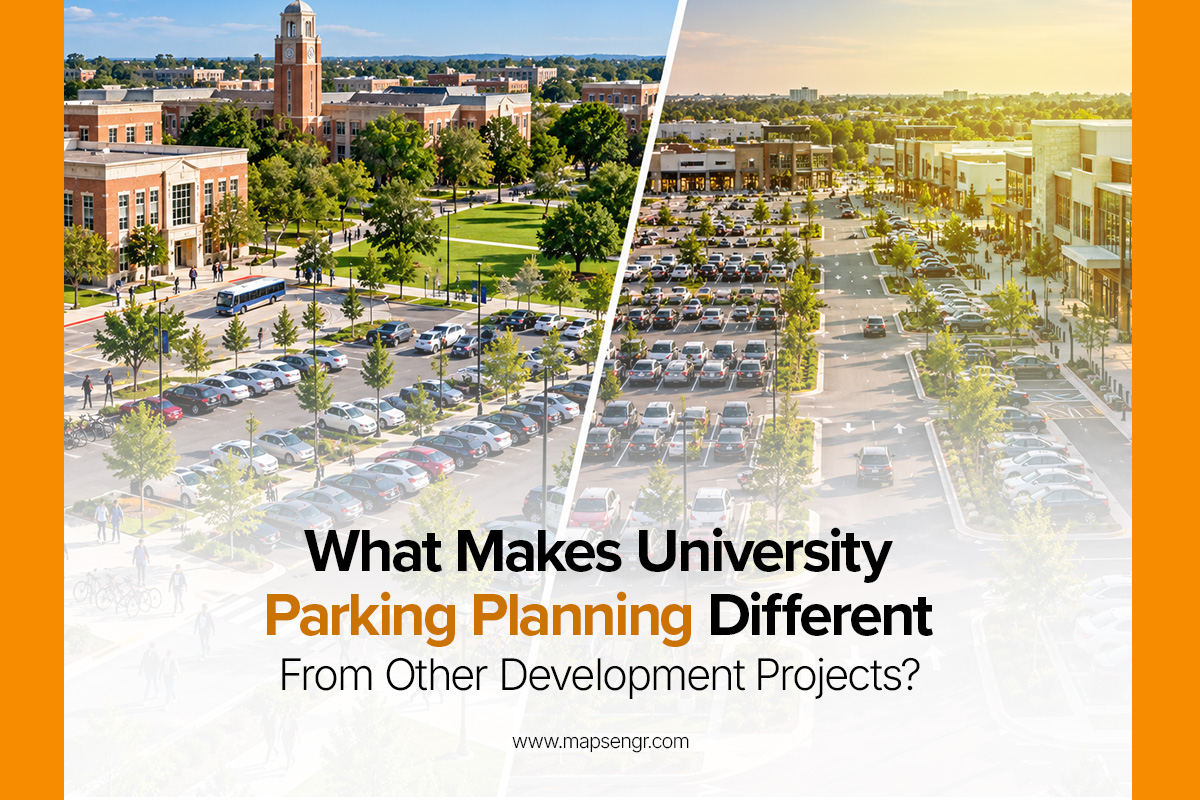
Parking planning is an important part of any development, but a university campus presents challenges that are rarely found in standard residential, office, or retail projects. A campus serves students, faculty members, employees, visitors, service vehicles, and event attendees. Each group arrives at different times, stays for different periods, and needs access to different parts of the property. Parking demand can also shift throughout the day, across the academic term, and during special events. A system that works during a normal weekday may struggle during enrolment periods, sporting events, conferences, or graduation ceremonies. Working with a university parking planning consultant helps institutions understand these conditions and develop practical solutions that support both current operations and long-term campus growth.
Parking Demand Is More Difficult to Predict
Most development projects have clear periods of peak parking demand. Office buildings are generally busiest during working hours, while residential properties usually experience greater demand during evenings and overnight.
University campuses do not follow such a simple pattern. Morning classes may create an early increase in traffic, followed by another peak around afternoon or evening programmes. Some students remain on campus for only one class, while staff members may occupy spaces for most of the day.
Parking Must Work With Campus Mobility
Parking cannot be treated as an isolated part of a university. It must connect with pedestrian paths, shuttle routes, bicycle facilities, public transport, internal roads, and nearby streets.
Parking too close to central academic areas may increase vehicle activity where pedestrian movement is highest. Parking too far away may create long walking distances and accessibility concerns. The most effective arrangement usually balances parking locations with safe and convenient connections to classrooms, offices, residence halls, and event facilities.
Professional parking planning for Florida universities should also review local road conditions, nearby intersections, transit availability, and surrounding land uses. This wider approach can help reduce internal congestion and improve movement throughout the campus.
Campus Land Must Support Several Priorities
Land on a university campus may be required for classrooms, laboratories, housing, sports facilities, landscaping, or future development. Surface parking can occupy a large area that might otherwise support these uses.
Too little parking may lead to congestion and spillover into surrounding neighbourhoods. Too much parking may increase construction and maintenance costs while limiting future development opportunities. The goal is to provide enough capacity without using more land than necessary.
A consultant specialising in university parking planning can evaluate whether existing parking areas could be improved through better layouts, shared use, permit management, wayfinding, or changes in space allocation. In some cases, operational improvements may reduce the need for an additional lot or parking structure.
Florida Campuses Require Local Analysis
Parking conditions vary across Florida. An urban campus with access to public transport may require a different strategy from a suburban university where most students commute by car. Local traffic patterns, municipal requirements, surrounding developments, drainage needs, and weather conditions can also influence planning decisions.
Effective parking planning in Florida should therefore be based on site-specific information rather than general assumptions. Accurate data can help determine how much parking is needed, where it should be located, and how it should connect with the surrounding transportation network.
Conclusion
University parking planning is different because a campus functions as a changing, mixed-use environment. Demand varies according to class schedules, user groups, academic terms, special events, and future construction. Parking must also work alongside pedestrian movement, public transport, bicycles, shuttles, and internal road systems. An effective strategy looks beyond the number of available spaces. It considers how those spaces are used, where they are located, and how the parking system can adapt over time.
FAQs
How Often Should a University Review Its Parking Plan?
Universities should review parking conditions whenever enrollment, campus facilities, class schedules, or transportation options change significantly.
Can Parking Technology Improve Campus Operations?
Yes. Digital permits, occupancy tracking, mobile payments, and real-time space information can make parking easier to manage and use.
What Data Is Needed for a University Parking Study?
A study may use parking counts, permit records, user surveys, arrival patterns, turnover rates, and information about planned campus growth.