
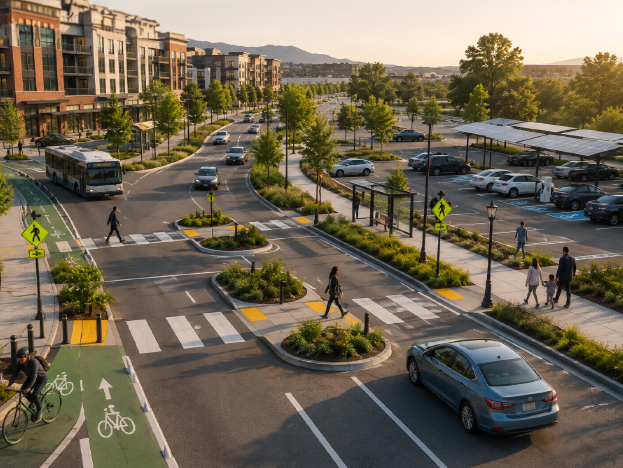
Parking plays a bigger role in community function than many people realize. In municipal settings, it affects traffic circulation, pedestrian comfort, accessibility, public safety, and the overall ease of moving through downtowns, civic spaces, and mixed-use areas. When parking is not planned properly, the result is often more than inconvenience. It can lead to congestion, unsafe vehicle movements, poor use of public land, and ongoing operational issues that strain both infrastructure and budgets. That is why working with a municipal parking planning consultant is an important step for communities that want practical, long-term solutions.
Parking Planning Has a Direct Impact on Safety
One of the clearest reasons municipalities invest in parking planning is safety. Poorly organized parking areas can create conflicts between drivers, pedestrians, cyclists, delivery vehicles, and public service traffic. Unclear circulation patterns, limited visibility, inefficient access points, and unmanaged curb activity all increase the chances of confusion and risk.
A skilled municipal parking planning consultant looks at these conditions in a broader operational context. That includes how vehicles enter and exit a site, how people move between parking areas and nearby destinations, and how the parking system interacts with surrounding streets and public spaces. This kind of analysis helps municipalities identify practical improvements that reduce conflict points and support smoother movement for everyone using the area.
Efficient Communities Need Parking That Matches Real Demand
A common problem in municipal parking is relying on assumptions instead of actual usage patterns. In some cases, communities end up with more parking than they need, which can waste land and increase construction and maintenance costs. In other cases, parking is undersupplied or poorly distributed, which creates spillover issues and weakens traffic flow in surrounding areas.
This is where a municipal parking planning consultant brings real value. Instead of focusing only on the number of spaces, the consultant studies how parking functions in real conditions. That includes occupancy, turnover, peak demand periods, user behavior, and the relationship between public parking supply and nearby land uses. Once municipalities understand these patterns, they can make better decisions about whether they truly need more parking or whether existing assets can be improved through layout changes, management strategies, or better circulation design.
Good Parking Planning Supports Better Public Spaces
Parking decisions influence how a community feels and functions. In municipal settings, parking is closely tied to access, convenience, and the overall public experience. If visitors cannot easily understand where to park, if employees occupy prime short-term spaces, or if curbside activity is disorganized, the result is frustration for everyone who uses the area.
Well-planned parking helps create a stronger balance between access and movement. It can improve how downtown districts operate, support local businesses, reduce unnecessary circulation, and make public destinations easier to reach. It also helps municipalities use valuable land more effectively by ensuring that parking supports broader planning goals instead of working against them.
Why a Parking Feasibility Study in Florida Is So Important
Before expanding supply, redeveloping a public site, or considering structured parking, municipalities need a clear understanding of what is actually justified. A parking feasibility study in Florida provides that clarity by evaluating whether additional parking is needed, what type of parking would work best, and how a proposed solution is likely to perform over time.
This matters because parking infrastructure is a major investment. Building new public parking without a sound feasibility review can lead to unnecessary costs, underused facilities, or operational challenges that continue for years. A well-executed parking feasibility study in Florida helps municipalities make decisions based on real conditions rather than assumptions or outdated standards.
In Florida, that process is especially valuable because local conditions can vary widely. Demand may shift based on tourism, seasonality, redevelopment, growth patterns, or the nature of surrounding land uses. A thoughtful parking feasibility study in Florida helps municipalities respond to those realities with a more informed and cost-conscious strategy.
Conclusion
Safer, more efficient communities do not happen by accident. They are shaped by decisions that improve how people move, access destinations, and use shared public space. Parking is a major part of that equation, and municipalities need more than extra spaces to solve the problem. They need planning that is data-driven, realistic, and tied to the way the community actually functions. A qualified municipal parking planning consultant helps local governments make smarter choices about parking supply, circulation, safety, and long-term operations. At the same time, a well-grounded parking feasibility study in Florida gives municipalities the insight needed to evaluate investments carefully and avoid costly missteps.
FAQs
1. What does a municipal parking planning consultant do?
A municipal parking planning consultantevaluates parking demand, circulation, access, safety, and operations to help communities plan parking systems that are practical, efficient, and easier to manage.
2. Why is parking planning important for municipalities?
Parking planning helps municipalities reduce congestion, improve safety, support local access, and make better use of public land and infrastructure.
3. When is a parking feasibility study needed?
A parking feasibility study in Floridais useful before building new parking, redeveloping a site, or changing parking operations, especially when demand, cost, and long-term use need to be clearly understood.
4. Can better parking planning improve public safety?
Yes. Better parking planning can reduce vehicle conflicts, improve visibility, organize circulation, and make pedestrian movement safer in busy public areas.
5. How does parking planning support community efficiency?
It helps municipalities align parking supply with actual demand, improve traffic flow, reduce unnecessary expansion, and create parking systems that function better over time.