
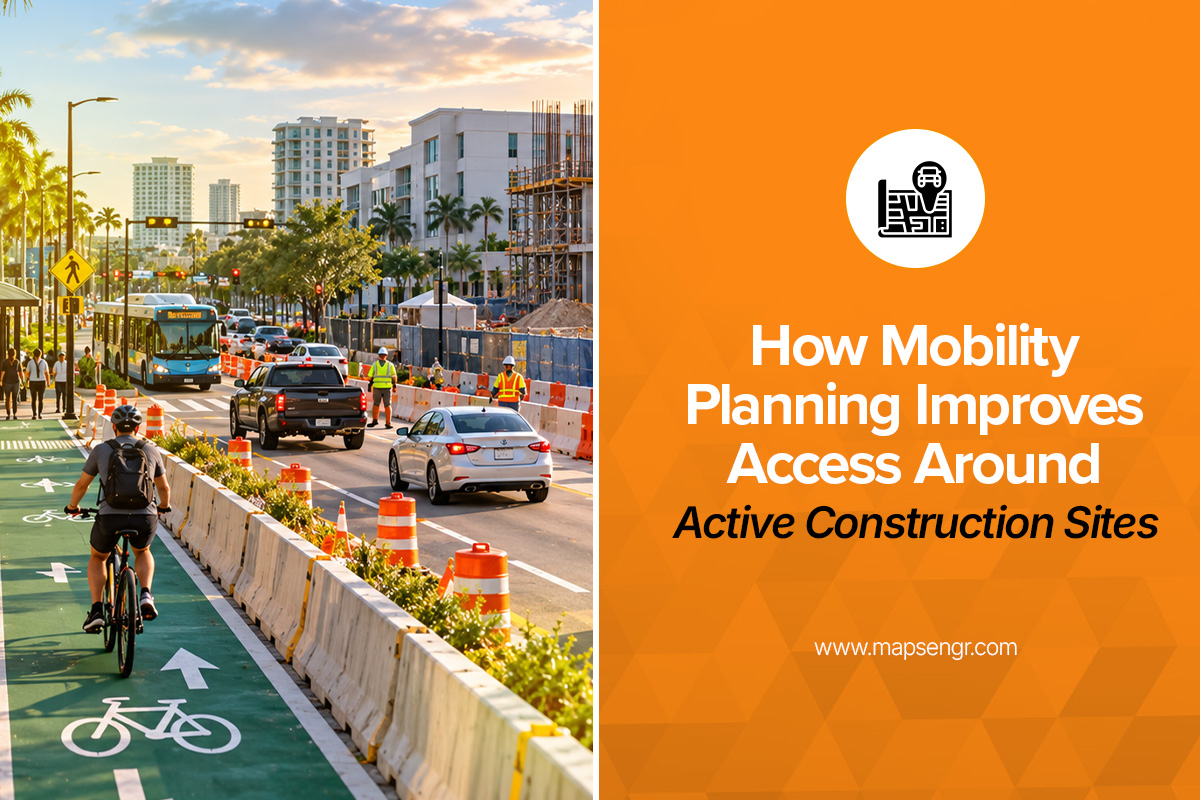
Construction projects often require temporary changes to roads, sidewalks, driveways, bicycle lanes, and public transport stops. These changes may be necessary, but they can also make it difficult for people to move safely and efficiently around the work area. Drivers may face lane closures, pedestrians may lose access to their usual routes, and nearby businesses may become harder to reach. Careful mobility planning helps prevent these issues from becoming major disruptions. Through professional mobility planning services, project teams can create practical access arrangements that support construction while keeping the area functional.
Assessing Access Before Construction Begins
Effective planning starts with understanding the existing conditions around the construction site. Engineers review nearby roads, intersections, sidewalks, bicycle facilities, public transport stops, parking areas, and property entrances.
They also consider traffic volumes, peak travel periods, vehicle speeds, construction activities, and the expected duration of the work. This information helps identify where access problems are most likely to occur.
For example, a lane closure may create congestion at a nearby intersection, while a blocked driveway may affect access to a business or residential property. Identifying these concerns before work begins gives the project team time to develop suitable alternatives.
Managing Vehicle Movement Around the Site
Construction can change normal traffic patterns through lane closures, temporary diversions, reduced road widths, and construction vehicle movements. Without proper coordination, these changes can lead to congestion, sudden merging, and unclear driving conditions.
Advance warning signs, temporary road markings, channelising devices, traffic signals, and detour signs can guide motorists through or around the site. The appropriate solution depends on the road layout, traffic volume, speed, visibility, and type of construction work.
A carefully prepared MOT plan for a Florida project outlines how traffic and other road users will be managed during construction. It may include lane closure arrangements, temporary routes, work hours, construction access points, pedestrian controls, and project staging.
Supporting Cyclists and Transit Users
Bicycle lanes and shared-use paths should not end unexpectedly when they reach a construction site. Cyclists need clear information about whether they should follow a temporary route, merge with vehicle traffic, or use a signed diversion.
Transit access also requires attention. Construction may affect bus stops, boarding areas, route schedules, or pedestrian connections to public transport. Temporary stops should be easy to identify and connected to safe walking routes.
Professional mobility planning services bring these travel modes into the wider construction access strategy. This creates a more complete plan that does not focus only on vehicle traffic.
Improving Project Coordination and Approvals
Early mobility planning helps engineers, developers, contractors, property owners, and public agencies understand how temporary access will be managed. It can reduce last-minute changes, avoidable delays, and conflicts between construction activity and road users.
A detailed Florida MOT plan can also support the review and approval process by clearly presenting the proposed traffic-control arrangements. It shows how the project intends to manage lane closures, public access, construction vehicles, pedestrians, and other temporary conditions.
Conclusion
Active construction sites can temporarily change how people reach homes, businesses, public facilities, and other destinations. However, these changes can be managed effectively when access is considered from the beginning of the project. Good mobility planning maintains clearer pedestrian routes, more organised vehicle movement, reliable property access, and better connections for cyclists and transit passengers. It also allows access arrangements to change as construction moves through different phases. By combining broader mobility analysis with a well-developed MOT plan in Florida, project teams can reduce unnecessary disruption and create safer, more practical access around active construction sites.
FAQs
Who Is Responsible for Preparing an MOT Plan?
A qualified traffic engineer typically prepares the plan in coordination with the contractor, developer, and relevant transportation authority.
Can Mobility Planning Help With Permit Reviews?
Yes. Clear access and traffic-management details can help reviewing agencies understand how construction impacts will be handled.
What Information Is Needed Before Planning Begins?
Project teams usually need site plans, construction phasing, work hours, nearby road conditions, and expected equipment movements.