
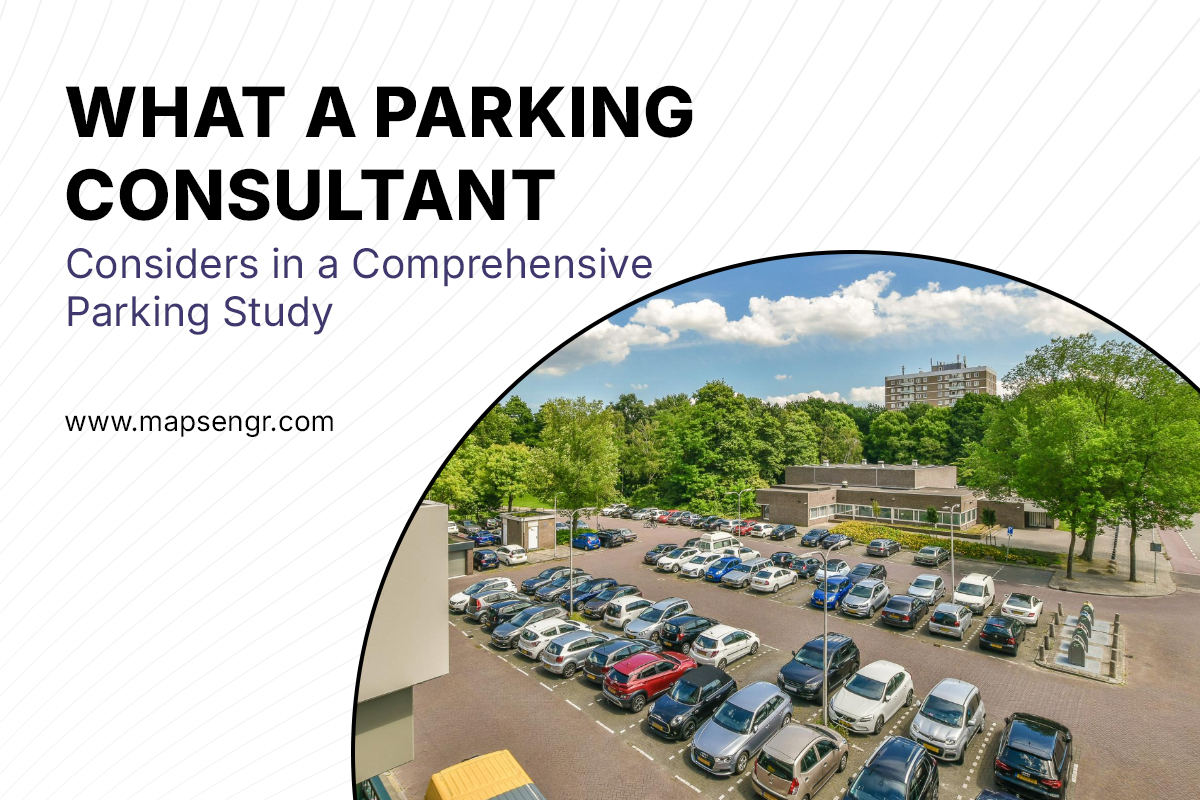
A comprehensive approach to parking analysis brings together multiple data points to evaluate how supply, demand, circulation, and access function in a specific area. In the first stage of any assessment, we offer a structured method for gathering accurate information so the study can support effective decision-making. A Comprehensive Parking Planning Study helps establish a clear picture of current conditions and highlights the improvements needed to support safer, more efficient mobility across different types of development.
Understanding Parking Demand Forecasting
Parking demand forecasting is the foundation of any planning assessment. It evaluates the number of spaces required based on land use, anticipated growth, and activity peaks. Consultants review real-time occupancy, trip generation, and peak-hour patterns to project future demand accurately.
This step ensures that the study supports long-term planning goals and prevents inefficient overbuilding or underbuilding. The goal is to “Right-Size” parking and to support all users efficiently. Forecasting also helps align parking needs with broader mobility strategies.
How Utilization Analysis Shapes Better Parking Decisions
Utilization analysis examines how existing spaces are being used throughout the day, seasons, and year. This includes turnover, occupancy rates, high-demand intervals, demand per user, and underutilized areas. Understanding these patterns allows consultants to identify operational issues or imbalances between supply and demand.
The findings can guide adjustments regarding management, reallocation of spaces, modifications to time limits, and implementing or adjusting parking rates. Accurate utilization analysis is essential for creating recommendations that improve functionality, management, optimization, and user experience.
Evaluating Parking Planning in Florida and Downtown Activity Zones
Parking planning efforts often focus on dense activity zones where demand fluctuates based on business hours, residential needs, or visitor patterns. Parking Planning in Florida and Downtown environments requires reviewing access, walkability, adjacent land uses, and the overall circulation network.
Consultants study how vehicles move into and out of parking areas, identifying conflict points and areas with poor wayfinding or congestion. This stage ensures that any proposed changes support smoother traffic flow and enhance safety for drivers, cyclists, and pedestrians.
Shared Parking Strategies for Mixed-Use Areas
Shared parking evaluations are especially valuable in districts with multiple land uses operating on different schedules. Consultants assess how offices, retail spaces, residential units, and entertainment venues share parking throughout the day. Typically, the time, captive, monthly, and parking ratios from the Urban Land Institutes (ULI) Shared Parking are applied.
This strategy reduces unnecessary construction costs and maximizes the efficiency of existing facilities. By reallocating or staggering demand, shared parking can significantly improve space availability without requiring additional infrastructure.
Circulation Patterns and Access Review
A circulation analysis reviews how drivers navigate through lots, garages, and adjoining road networks. Elements such as geometrics, wayfinding signage, and visibility lines are inspected to confirm they meet safety and operational standards. This step also identifies areas prone to bottlenecks or unsafe maneuvers. Improving circulation patterns directly contributes to reduced delays, improves safety, and enhances the user experience.
Curb Management and Its Role in Parking Planning
Curbside spaces are essential components of a parking study, especially in commercial districts. Consultants evaluate how loading zones, delivery areas, rideshare activity, micromobility parking, and short-term stopping areas affect traffic conditions.
Proper curb management can ease congestion, improve pedestrian safety, and support more efficient transportation operations. This part of the study often leads to recommendations that balance commercial needs with general mobility priorities.
Conclusion
A well-executed Comprehensive Parking Planning Study combines forecasting utilization, shared parking assessments, parking/transportation policy, operations/management, circulation/wayfinding, and curb management to create a clear, actionable parking strategy. These components help improve access, safety, and mobility while supporting long-term economic development goals.
By applying these techniques, we guide stakeholders toward informed solutions that meet user needs and operational requirements. MAPS follows these structured methods to provide reliable planning outcomes and support effective decision-making through every stage of the process.
The goal is to create a system that functions smoothly and adapts to future needs while addressing the core requirements evaluated in a Comprehensive Parking Planning Study.
For tailored guidance on improving parking operations and mobility planning, contact us today to discuss your project needs and informed planning solutions.
FAQs
1. What is the purpose of a Parking Consultant Planning Study?
It evaluates current and future parking needs based on demand, utilization, circulation, and curb activity to guide effective planning and operations/management decisions.
2. Why is forecasting important in a parking planning study?
Forecasting helps determine how many spaces will be required as land use and population change over time.
3. How does utilization analysis improve parking operations?
It identifies how parking spaces are used, highlighting high-demand periods, underutilized areas, and inefficiencies that can be corrected.
4. What role does curb management play in planning?
It helps regulate loading zones, rideshare activity, and short-term parking to reduce congestion and improve safety.
5. Why are downtown areas a focus in many parking studies?
Downtown districts have fluctuating demand and dense activity, making structured planning essential for mobility and access.